Getting a diagnosis is too hard
Complex patients are forced to become experts during the worst moments of their lives. Informed Patient can ease their burden.
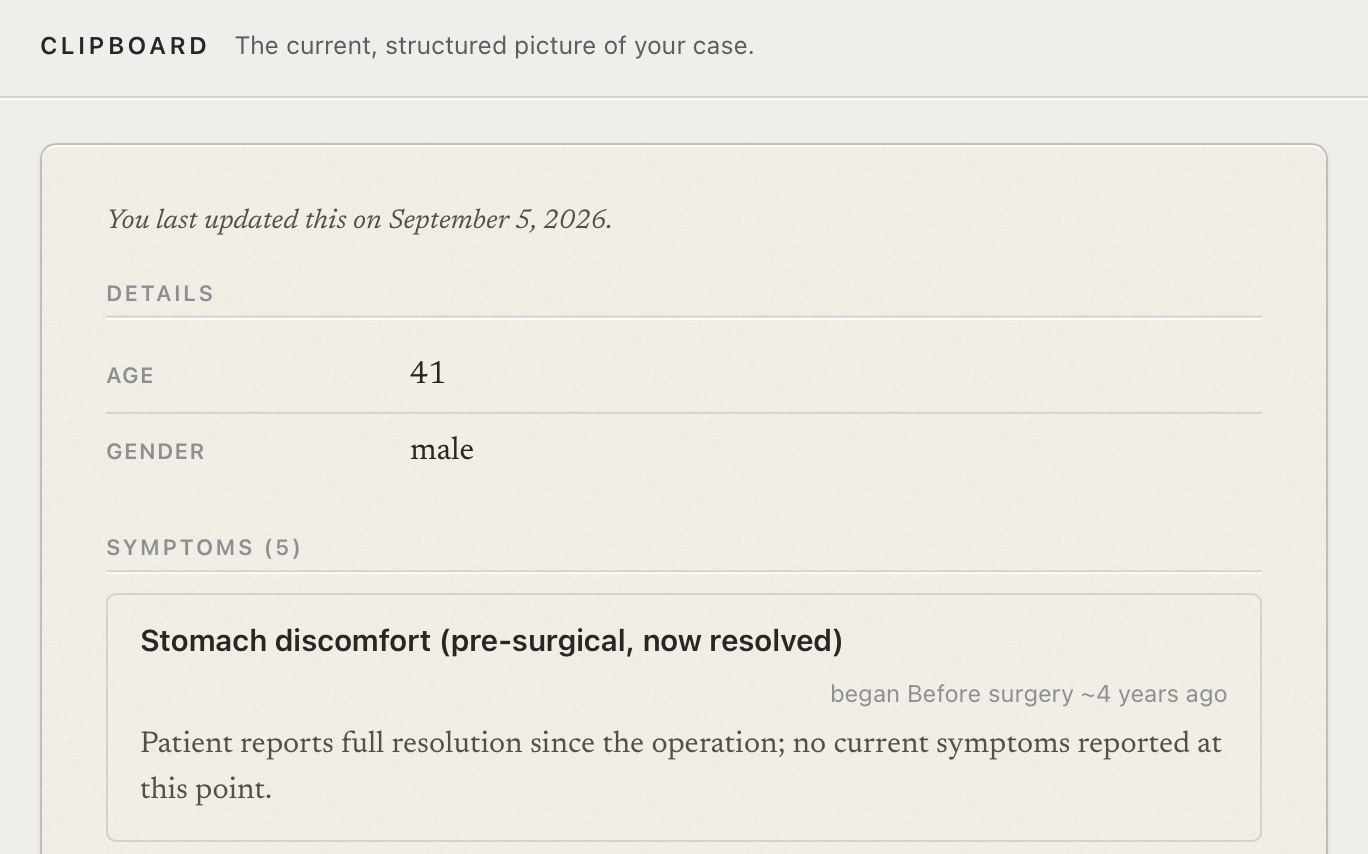
Informed Patient is an automated patient binder and relentless advocacy coach. It organizes the patient’s evolving state, investigates the evidence around their case, and helps them gain the confidence and understanding required to represent their own needs.
The methodology already works. Cat Hicks created Informed Patient for her own care, used it to understand and respond to her father’s chemotherapy crisis, and discovered that other complex patients needed it too. Danilo Campos has built production agents operating at scale.
Together, we are turning the method into infrastructure. We need your investment to get it right.
Review our position:
Patient success is improved by rigorous preparation
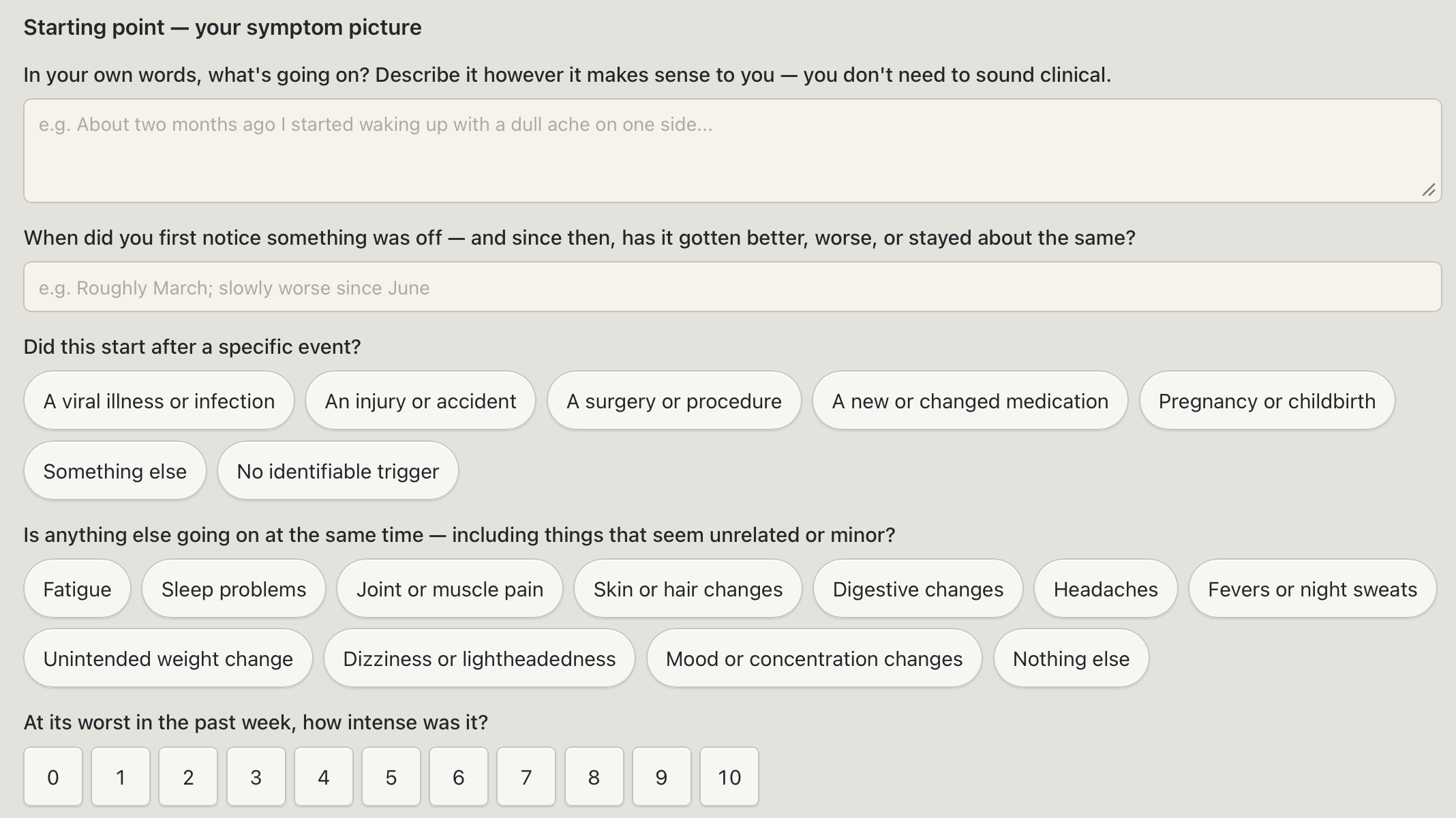
How a patient experiences their symptoms can vary dramatically from how those symptoms are described in the literature. More than that, patients who are new to a condition may struggle to map their experiences into a narrative that doctors can interpret.
Compounding the problem: doctor visits are fast. Preparation can make the difference between a targeted next move and a shot in the dark.
The patient information burden is a gate to care
At one of the most high-stress moments in your life, you also assume the role of managing detailed information. The experiences of your symptoms, histories and timelines, family history... the work is substantial.
Patients resort to maintaining detailed binders of their case histories to support and bridge the information systems doctors use themselves. But executive function and organizational skills no longer need to gate who gets access to the best care. Agentic systems can manage these details and even help patients unearth more information before doctor visits through customized elicitation.
Patients can leave critical junctures uncertain about what comes next
Technical jargon can be overwhelming, and again, time is at a premium in care settings. Understanding new information, lab results, and the patient's role in their own care is a serious challenge. Successful understanding impacts immediate results and long-term outcomes.
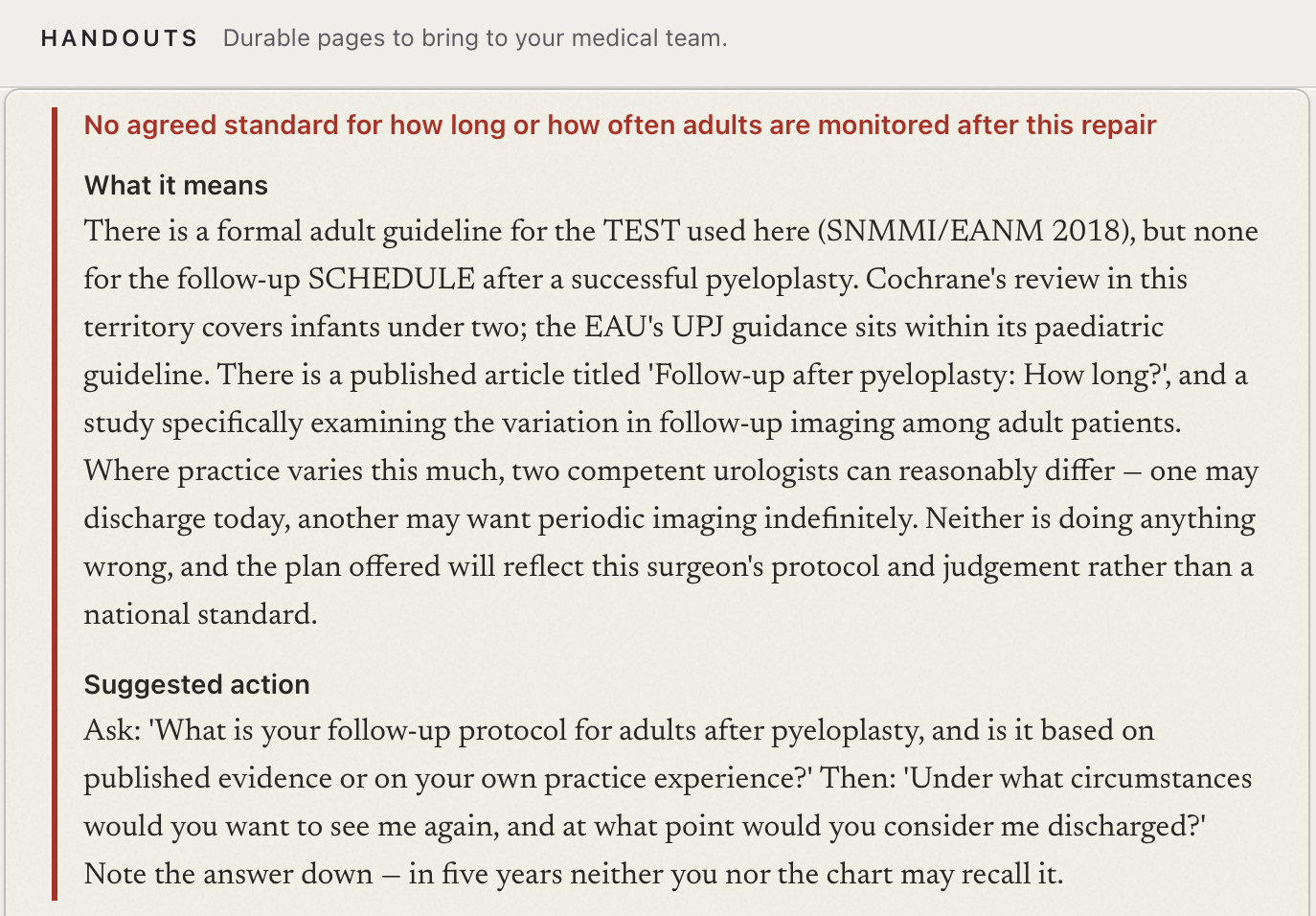
With an evidence-grounded LLM session, patients can get all the help they need understanding new medications, recovery protocols, and other tasks they need to master as part of their treatment. This creates patients who are confident and informed about their circumstances, choices and needs.
LLM tools gather information quickly with infinite patience
An LLM-based tool can rapidly gather the latest information on a medical condition, its research, and the established approaches to diagnosis, treatment and care. It can integrate that information with patient-reported symptoms and history to arrive at plausible next steps for an investigation or diagnosis.
At the same time, it can explain things in a way that's custom-tailored to every user's level of technical comfort. Models can help patients talk through their symptoms and needs at great length, synthesizing the results of these conversations and the literature into a concrete plan of action.
This arms patients with the right questions to ask doctors, making each visit more likely to produce real progress.
The scientific landscape is exploding and only advanced tools can accelerate literature discovery for doctors and patients
Medical evidence contains remains fragmented and inaccessible for most people. LLM capacity to conduct iterative and personalized analysis across verified high quality scientific findings, driven by a patient’s personalized inventory, closes this gap decisively.
Patient outcomes are further harmed by the silos between medical fields. While studies focus on single conditions or disease states, the majority of patients will present with complex, co-occurring conditions.
This forces patients to spend years trying to understand how to manage interrelated symptoms. As medical practice advances in its ability to directly treat the mechanisms of disease, providers are being asked to navigate these silos and make connections themselves to treat patients in the context of an overwhelming evidence base.
The scale of the problem is no longer human-shaped.
We need better knowledge management tools for both patients and providers. Closing initial care gaps at scale across many patients with similar combinations of symptoms can provide uniquely powerful insights for patients, providers, and researchers, surfacing understudied connections between conditions and interventions.
This also creates the surface area needed to build a rich agentic infrastructure for exploring medical literature, enabling us to contribute to advances in how scientific findings are shared, stored, and audited.
An unconstrained language model is dangerous in this context
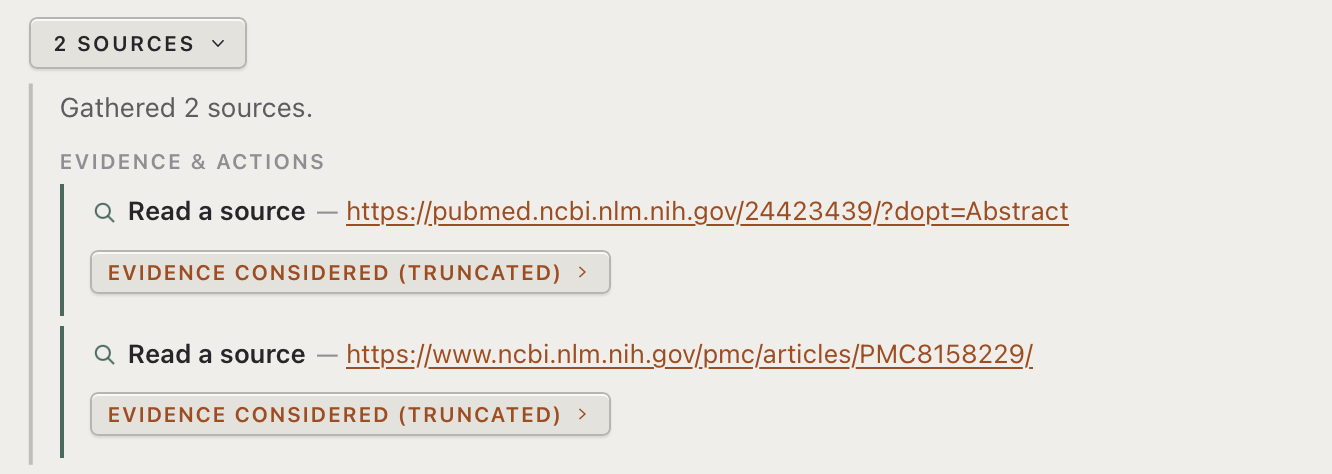
Using a model to review medical literature is powerful, but it also requires the ability to audit what was read. General purpose LLM tools are not optimized for this high-stakes work.
A carefully designed process for guiding and constraining the model behavior is key. Emerging strategies in agent and context engineering provide the path to a clear chain of evidence and auditable reasoning.
Even with these advances, the key is to accelerate evaluation, investigation, and understanding by patients and doctors, not to replace human judgment and insight.
The frontier is now in the agent, not the model
Frontier models are now vast, trained across a variety of sources, including medical specialties. Still, a model is a lossy form of compression rather than an authority or information source unto itself. Its role is to guide investigation and literature review.
The missing component is a specialized agent harness and related literature search infrastructure. These resources support structured search of trustworthy sources, detailed auditing of the sources considered, and logical scaffolding of the most promising next steps. The model is not the authority: the design of the agent classifies everything from the strength of evidence to the totality of the patient's self-report.
Personalized, preventative and precision medicine requires new forms of service design
The same infrastructure that creates better patient outcomes also opens a path to broad, sponsored access. Life sciences companies can fund Informed Patient for people navigating relevant conditions, giving patients an independent advocacy tool while reducing the friction between diagnosis, appropriate care, and treatment. Sponsors fund access, not recommendations: they receive no influence over the agent and no access to identifiable patient records.
Improving timely diagnosis and access to care is core to the benefits of breakthrough medical treatments.
As novel therapies emerge across areas such as immunology, rare diseases, and gene therapies, the marginal value of early diagnosis rises as treatment efficacy increases. At the same time, the current delays in appropriate triage, care and diagnosis that complex patients face are close the doors forever on life-changing early intervention.
Studies fail because they can't recruit. Reachable, informed patients change this
Patients using a system that catalogs their history, symptoms, and treatment progression can also choose to receive invitations to relevant medical studies.
Many studies fail because they can't meet recruitment demands. An agentic system that can facilitate introductions to patients who opt into communications from study organizers can ensure more studies succeed, accelerating the rate of medical progress for everyone.
These are newly solvable problems
Many patients now turn to LLMs for help with difficult conditions, but their outcomes can vary far too much. The latest developments in agentic systems now unlock a unique opportunity to close gaps in understanding, research, communication, and patient self-assessment, while providing responsible checks and guardrails that keep the process productive and grounded in evidence.
With this grounding in evidence, an LLM is a powerful tool for breaking jargon and complex systems into plain language explanations tailored for every patient. This creates the opening for patients to collaborate more effectively with their care teams, developing new confidence and clarity in a high-stakes situation.